
On Friday, March 20, the International Energy Agency published an emergency report called Sheltering from Oil Shocks. Its recommendations read like wartime rationing: work from home. Reduce speed limits. Restrict car access to cities on alternating days based on licence plate numbers. Cut business flights by 40%. Switch from gas cooking to electric where possible.
This is the language of a global agency in crisis mode.
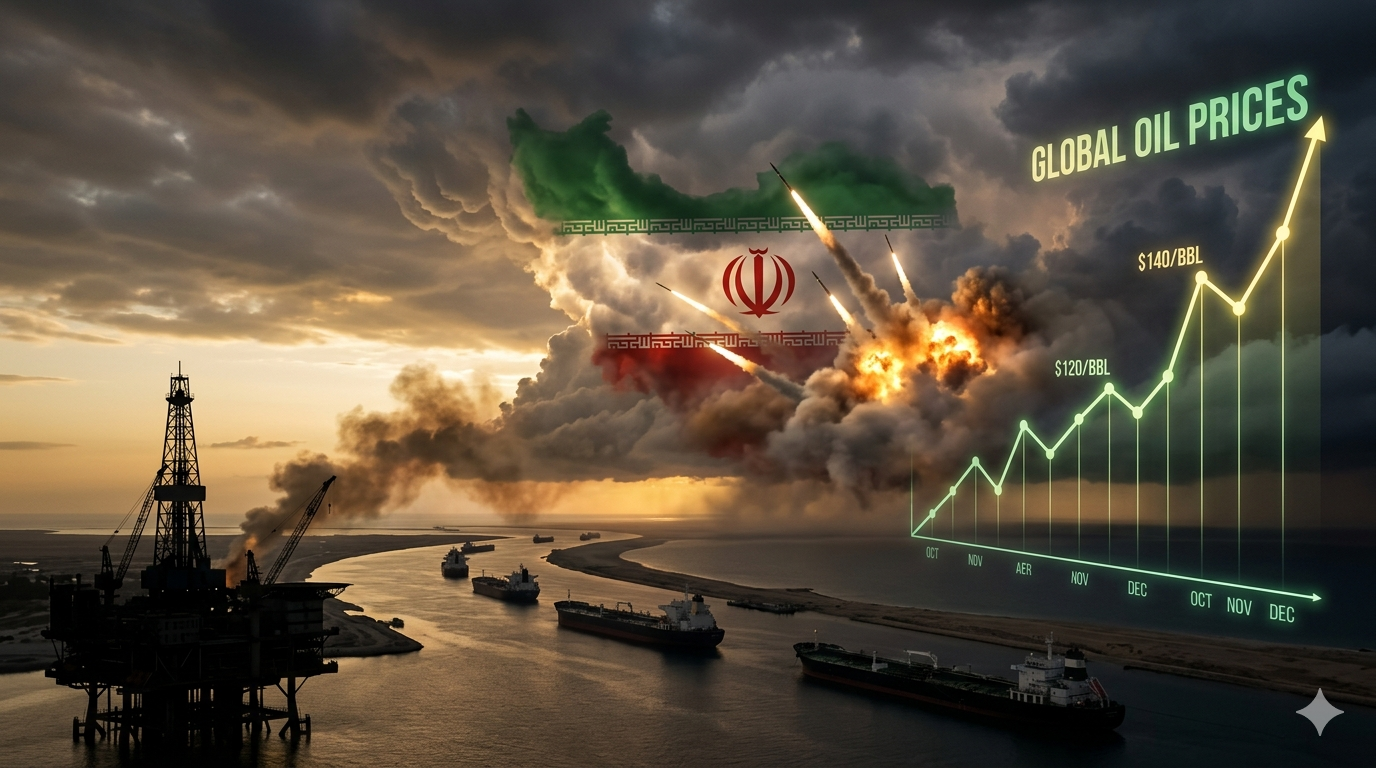
The US-Israel war on Iran has effectively closed the Strait of Hormuz, choking off roughly 20 million barrels per day of crude oil and petroleum products — about 20% of global supply. The IEA calls it the largest supply disruption in the history of the global oil market. Oil prices have surged above $100 a barrel. The IEA has released 400 million barrels from strategic stockpiles — the largest coordinated release in its 52-year history — and says supply measures alone won’t be enough.
Countries are scrambling. The Philippines and Pakistan have introduced four-day government work weeks. Sri Lanka has shut public offices on Wednesdays. Bangladesh has closed universities and shut down fertilizer factories to redirect gas to power plants. Spain is slashing VAT on fuel from 21% to 10%. None of this is coming from climate activists. It’s coming from finance ministers trying to keep their economies from tipping into recession.
A simplistic reading of this crisis would say the world needs more oil and gas. The history of oil shocks says the opposite. Every major disruption has produced lasting structural change designed to reduce dependence on fossil fuels. And this time, perhaps for the first time, viable alternatives to oil and gas are ready, proven and operating at scale.
We’ve been here before — and it changed everything
The 1973 and 1979 oil shocks drove structural, lasting changes that reshaped the global economy for decades. US passenger car fuel efficiency went from 12.9 miles per gallon in 1974 to 27.5 by 1985 — more than double. Japanese automakers surged past Detroit by 1980. Congress created the CAFE fuel efficiency standards, the Gas Guzzler Tax, and the Strategic Petroleum Reserve. The IEA itself was founded as a direct response to the 1973 embargo. An entire architecture of energy security was built in a few years.
Here is the point that matters most: all of that happened when there was no viable alternative to oil. There were no electric vehicles. No solar farms. No wind turbines at scale. The world had no exit ramp. It could only slow down.
Today, the alternatives exist. Solar and wind are the cheapest sources of new electricity in most of the world. Electric vehicles are already displacing significant amounts of oil — BloombergNEF estimates 2.3 million barrels per day in 2025, more than the equivalent of Iran’s entire pre-war oil exports. As one analyst put it, this is “the first oil and gas crisis in which clean alternatives are fully price-competitive.”
The 1970s shocks, with no alternatives, remade the auto industry and launched the age of energy policy. This shock is larger and the alternatives are better. And it appears to be acting as a catalysing event for policymakers in import-dependent countries — redoubling their resolve to transition away from a fossil fuel dependence they now rightly see as a threat to their national security.
Three-quarters of the world is thinking “never again”
Seventy-four per cent of the world’s population lives in a country that is a net importer of fossil fuels. That’s roughly 5.9 billion people watching their energy bills climb, their food prices rise, and their economic stability erode — because of a war they had no part in, over a resource they don’t control.
This is the second time in four years they've learned this lesson. And they're acting on it.
South Korea's president called the crisis "a good opportunity to transition to renewable energy." Seven EU energy ministers issued a joint call for more clean power investment. The UK is accelerating green energy auctions — not despite the crisis, but because of it. UN Secretary-General Guterres said renewables offer countries an "exit ramp" from fossil fuel dependence.
More than 100 countries have already reduced their fossil fuel import dependence through renewables. The UK, Germany, and Chile cut imported coal and gas by roughly a third since 2010. Denmark cut reliance nearly in half. Spain has nearly decoupled its electricity prices from gas. Pakistan deployed solar at extraordinary speed after the Ukraine war and is now held up as a model. The direction is clear and accelerating.
And the moral cost of dependence is laid bare. The US Treasury eased Russian oil sanctions on March 12 to increase global supply. Russia's fossil fuel earnings immediately jumped to €7.7 billion in two weeks — money that funds its war machine. European Commission President Ursula von der Leyen called returning to Russian energy "a strategic blunder." But the pressure is building. This is what fossil fuel dependence looks like when the system breaks: European nations forced to finance a regime that poses a direct military threat to their security, because they have no alternative they can switch to fast enough.
Don't mistake a price spike for a demand signal
Still, some proponents of fossil fuels are claiming that this crisis proves the world still needs oil and that we should invest more in production, not less.
It's the wrong conclusion. The question for anyone contemplating a new pipeline or LNG terminal is not "is demand high this year?" It's "can I count on demand growth over the 10 to 20 years it takes to build and pay off this infrastructure?"
The oil industry's own behaviour answers that question. Globally, the industry has shifted to what analysts call "capital discipline" — prioritising mergers, buybacks, and cost-cutting over investment in new production. In 2024 alone, oil and gas companies returned $349 billion to shareholders through dividends and buybacks. In a Dallas Fed survey, 56% of oil and gas executives said publicly traded companies are restraining production due to investor pressure to maintain capital discipline. Supermajors are laying off thousands. The industry is generating enormous cash flow — and sending it to shareholders rather than investing it in new production. As one portfolio manager at Artisan Partners, an investor in Suncor, put it: "We see these companies generating a lot of cash and returning almost all of it to the shareholders. That's the future that we see, and we find that future to be very attractive."
Attractive for shareholders. Not exactly a vote of confidence in long-term demand growth. The industry is harvesting, not planting. And every oil shock accelerates the political will of importing nations to reduce their dependence, steepening the long-term demand decline that was already underway.
A supercharged carbon tax replacement
Consumers, too, are being jolted into rethinking their futures with fossil fuels. Since the war began, the Canadian national average gas price has surged from roughly $1.31 to $1.70 per litre — an increase of about 39 cents at the time of this writing, March 20. Similar spikes are hitting drivers worldwide.
The math is unforgiving. A Canadian driving 20,000 km a year spends about $3,360 on gas at current prices. An EV covering the same distance costs roughly $530 in electricity. That's $2,830 a year — and over a decade, cumulative savings approach $28,000, assuming elevated prices persist. Even when prices settle, each shock widens the case for switching. And in Canada, 80% of electricity comes from non-emitting sources — hydro, nuclear, wind, solar — so electricity rates don't spike when wars break out.
Consumers are figuring this out. In Germany, MeinAuto saw a 40% jump in EV traffic since the war started. US EV searches rose 20%. After the 2022 Ukraine shock, US battery EV sales rose 66% that year.
There is a particular irony for Canadians. In April 2025, the Carney government eliminated the consumer carbon tax — 17.6 cents per litre — promising relief at the pump. That relief lasted less than a year. The war-driven price increase is about 2.2 times what the carbon tax was. And unlike the tax, which recycled revenue back to families through rebates, this price shock sends the excess profits to global oil companies. Canadians get nothing back.
Most economists and policymakers agree that carbon pricing works — that making fossil fuels more expensive relative to clean alternatives motivates consumers to switch. While Canada eliminated its consumer carbon tax in April 2025, the Iran war has now imposed a price signal more than double what the tax was. If the carbon tax was expected to change behaviour, a price shock of this magnitude should accelerate that change considerably — and the early evidence from EV markets suggests it already is.
The Canada conclusion
All of this has important implications for the Carney government's fossil fuel "superpower" ambitions. The Canada-Alberta MOU, the proposed new pipeline, the LNG expansion, and the rollback of climate regulations are all built on a premise: the world will want more Canadian oil and gas for decades.
Every signal from Canada's prospective customers says otherwise. The EU has cut gas demand 20% since 2021 and seven energy ministers just called for more clean power. The UK is accelerating green energy auctions. South Korea and Japan — both massively exposed through the Strait of Hormuz — are investing in alternatives at emergency speed. China added more solar capacity in the first half of 2025 than the rest of the world combined. These are the customers Carney is pointing to. And they are all doing everything they can to stop buying what Canada wants to sell them.
If it wasn't already clear that the fossil fuel industry was entering its mature phase and heading toward long-term decline, the events of the past four years should remove any doubt. The industry's own investment behaviour confirms it. And that has implications for any country planning to make large, long-term capital bets on fossil fuel infrastructure.
In my years in the pharmaceutical business, we had a director who warned us when we proposed investing in mature products in decline. "You're trying to catch a falling knife," he'd say. Catching a falling knife is dangerous — you're likely to end up bloody and hurt. Investing in decline is a treacherous game — things unwind faster than you expect, costs grow, and you end up losing. And even if you survive, the capital you tied up in a declining product is capital you didn't invest in the next generation of growth.
That's the question Canada should be asking right now. The short-term returns may look appealing at $100 oil. But the long-term trajectory is down. Over 130 countries covering approximately 80% of global economic activity have committed to net zero, representing the vast majority of global oil demand. Carbon Tracker, an independent financial think tank whose analysis of stranded asset risk is widely cited by major investment banks, warns that almost no new oil sands projects are economic in a Paris-aligned world and that the majority of Canadian producers' project portfolios are at risk of becoming stranded assets.
Canada's deepening economic dependence on fossil fuels is a risk, not an opportunity. A far-sighted government would be working to manage that risk — not increase it. As the Canadian Climate Institute told the House of Commons: moving too slowly is now a greater competitive risk than moving too quickly.
Canada has everything it needs to thrive in the clean economy — low-cost clean electricity, critical minerals, a skilled workforce, and stable institutions. The Transition Accelerator and New Economy Canada have laid out concrete pathways in EVs, batteries, clean power, and critical mineral processing. But those pathways require the policy commitment and capital that are currently being absorbed by pipelines and LNG terminals that may never earn back their investment.
Canada is trying to catch a falling knife. And it's betting the country's economic future on its grip.
The lesson of the leash
The 1970s oil shocks, with no alternatives, produced the fuel-efficient car, the IEA, and the Strategic Petroleum Reserve. They remade the global auto industry and launched the age of energy policy.
This crisis is larger. And this time there's an exit ramp.
The nations that take it will build the economies of the next half-century. The nations that don't will be left holding infrastructure the world no longer needs, in an industry that has already told you — through its own investment decisions — that the growth story is over.
Canada can still choose which side of that line it's on. But the window is closing, and the oil shock of 2026 has just made the choice clearer than ever.
Leave a Reply